WIN

WIN 030

WIN 030 150 150 Ben Coker Strategies


Common Hours

Henry David Thoreau (1817-1862) the transcendental American philosopher wrote:
“If one advances confidently in the direction of his dreams, and endeavors to live the life which he has imagined, he will meet with a success unexpected in common hours.”
Let’s ‘unpack’ this statement made nearly 200 years ago
Of course Thoreau wasn’t the first to expound this principle, it appears in Greek and Biblical philosophy as well and also in many Eastern philosophies.
The thing is, it’s very important for you and I to understand how this works and that it does work.
The first word is ‘If’. In order for anything at all to happen or any success to be achieved, you and I must first decide to ‘advance confidently’. If we don’t then nothing happens.
The statement requires you and I to do two things; the first being to ‘advance confidently in the direction of our dreams’.
I’m using the American definition of ‘dream’ – something tangible that can be achieved – not the ‘fantasy’ of English usage.
This means that you and I must have confidence and belief in whatever it is we want to achieve, and we must know the direction in which to go to achieve it.
And then you and I must take action to ‘advance’. Just having confidence, believing or ‘thinking about it’ won’t work.
The next thing you and I have to do is to ‘endeavour to live the life we are imagining’.
Now . . .
What is meant by ‘imagining’?
In this context this doesn’t mean some sort of passing fancy or ‘day-dream’. The ‘life we are imagining’ has to be described in as much detail as possible. It will consist of many individual goals covering all areas of our lives.
This is after all a LIFE we are looking to transcend to not just a new car or a new house or a new job . . .
The best way for you and I to ‘imagine’ the life we would love to live is to write it all down in full detail – by hand, on paper.
Writing it out on paper helps our subconscious mind latch on to what we want in a way that has not yet been achieved by other technology.
Once again ‘endeavour’ means ‘work’. Knowing what we are ‘imagining’ you and I do what we can with what we have in order to move towards the life we want.
As you and I carry out this endeavour two things happen.
We discover that we have way more than we think we have to help us on our way and we pass an invisible boundary inside us.
These two things cause you and I to ‘meet with a success unexpected in common hours’.
Things happen ‘out of the blue’. Things happen often in an unexpected way. You and I achieve our goals, or parts of them, in ways that we didn’t expect, and sometimes in ways that you or I don’t understand – “How did that happen?”
You and I meet with the things or situations we want outside ‘common hours’ or in other words outside our ‘normal paradigms’ or ‘outside the box’.
You see
Thoreau’s statement doesn’t ‘fit’ with how you and I and most other people have been programmed in the 20th and 21st Centuries.
It doesn’t fit with delay thinking (“I don’t have the time”), scarcity thinking (“I don’t have the money”), victim thinking (“What will others think?”) and all the other constrictions that have been imposed on the way we live our lives.
All those redundant paradigms you and I are carrying around with us have to go.
IF you and I want to live the lives we would love.
Thoreau also wrote:
“Go confidently in the direction of your dreams. Live the life you’ve imagined”
Go on then . . .

WIN 029

WIN 029 150 150 Ben Coker Strategies


Pay Attention!

Who is it within me that can ‘notice’ what’s going on in my body but isn’t my body?
Who is it within you that does that?
Who is it within me that can ‘notice’ my thoughts, comment on my thoughts, decide to stop or continue my thoughts?
Who is it within you that does that?
Who is it within you and I who comes up with spontaneous ideas – ‘out of the blue’?
(Where or what is this ‘blue’ by the way?)
And who is the other guy within you and I, who discards those ideas and dismisses those observations?
Which one are you and I paying attention to?
Are you and I listening to the voice that says, when an opportunity or idea arises,
• “I’m not ready”
• “It’s not convenient”
• “I’m not sure how it would turn out”
• “You can’t do that”
and so on?
Or are we listening to the one who says “Give it a go”?
You see
In the first few months of our lives that ‘negative’ voice isn’t there. It isn’t something we’re born with. It doesn’t chip in with “you can’t do that” when we’re taking those very first steps learning to walk.
At that early age we’re noticing everything around us, paying attention to what’s going on and trying to make sense of this brand new environment we find ourselves in.
So where does this ‘second voice’ come from?
Even before you and I started school we were programmed with hundreds of different paradigms, many of which were described as ‘common sense’, that ‘showed us the ropes’, gave us the ‘rules’ and mapped out what ‘life’ was all about.
Because this ‘training’ came from various authority figures in our lives, parents and schools in particular but also from our peer group, most of us took them on board without question.
Those of us who did question, were labelled ‘misfits’ or found ourselves in ‘trouble’ – when all we were doing was noticing and paying attention to that first original voice inside us.
Unfortunately, the vast majority of people pay attention first and foremost and sometimes exclusively to their ‘second voice’.
And even when they become dissatisfied with their lives and even though they may develop ambitions and visions, are unable to fulfil their ‘dreams’ because they ignore their true selves.
(Maybe that’s why most people consider ‘dreams’ to be something unachievable.)
But you and I . . .
You and I don’t have to go along with this set of paradigms our ‘operating systems’ have been loaded with.
You and I can go within ourselves and notice our original programming – to ‘boldly go where no man has gone before’.
You and I can pay attention to that original voice, the one who watches what we are doing, listens to what we are thinking and comes up with all those great ideas and then . . .
Notice the second voice, notice the negative programming, notice the ‘common sense’ that objects to our originality, put it to one side –
And go boldly towards the achievement of our ambitions, visions, goals and dreams.
I’m paying attention.
Are you?

WIN 028

WIN 028 150 150 Ben Coker Strategies


The Dream Test

It’s that ‘dream’ word again and this week I’m using it according to Webster’s Dictionary of American usage where a ‘dream’ can be defined as something tangible and achievable – almost, but not quite, synonymous with a ‘vision’ or ‘ambition’.
The point is that for the purpose of this insight your ‘dream’ is something that you intend to come into being and believe will come into being.
Something that you want to achieve, and part or all of your personal vision for your life.
Whatever you and I describe this as, we all have thigs that we ‘want’ to do, be or have.
You and I have goals and targets and plans and so on but these are ‘less’ than ‘the dream’. They go together to make up the ‘dream’ of what you and I want to be, do, have and give back or contribute to our society or environment.
Yes – you and I all have many things we want to do, but here’s the thing.
Are all these goals, targets and plans part of the ’dream’, or are some of them distractions or constrictions that might get in the way of you and I really achieving our ‘dreams.?
The first question you and I can ask about what you are doing and where you are heading is:
Does it give me life?
Does the intention, goal, target, plan, ambition, vision or dream really make you feel, deep down, that it is adding to who you really are?
Next:
Does it align with my core values?
Is it something that you believe in? Is it consistent with who you or I really think we are? Is it something we can be proud of when we tell others about it?
The third question:
Will it cause me to grow?
Will whatever it is that you or I are doing or planning to do, add value to ourselves? Will it make us better human beings?
Will you and I think better of ourselves when we’ve carried out and completed the process that leads us to the fulfilment of our dreams?
The next two questions are critical and the first of these is:
Do I need help from a higher power?
What do I mean by ‘higher power’?
A higher power can be anything or anyone. At one extreme it can be the Universe, God, the ‘Force’ or however you think of the infinite power of creation.
At the other end of the scale it might be a mentor or a coach or simply someone who knows more about whatever it is that you or I want to achieve.
You see –
If you and I already know exactly what we need to do, how to do it and when to do it and already have the resources to make it happen, it doesn’t really qualify as a ‘dream’.
It may be part of a higher dream but one of the key characteristics of a dream is that you and I don’t quite know how to get there. And often, when we do ‘get there’, you and I wonder “how did that happen”.
For you and I to achieve our dreams we need help; both human help and help from ‘a higher power’.
Finally – and most of all:
Is there good in it for others?
Now this doesn’t mean that in order to have a dream you and I have to want to undertake a massive philanthropic exercise or achieve ‘sainthood’ through ‘good works’.
If you or I just make one other person happy, or even just happier than they were before in a very small way, then yes, there is good in it for others.
I have a dream – and I’m off to do some tests!
How about you?

WIN 027

WIN 027 150 150 Ben Coker Strategies


The Sword and the Trapeze

In his ‘Daily Dynamite’ message yesterday morning my friend Phil Olley reminded me about what happens when you and I decide that we want to move on, or forward, or up – whichever way you look at it.

You see, despite the fact that you and I have a vision about where we want to go and have goals, targets and plans supporting it, sometimes things just don’t go as we expected.

Sometimes it’s a diversion or delay caused by ‘roadworks’ in our path over which we have no control.

Sometimes you and I get stuck in the mud of our current comfort zone and find it difficult to leave this behind before moving to the next one.

Sometimes an unexpected circumstance collides with us, throwing us off balance. This could be a business competitor coming up with an ‘unbeatable’ deal, or it could be an economic change like a sudden ‘recession’, or it could be a health or relationship challenge.

When you and I are faced with ‘problems’ like these, the natural instinct is for the brain to go into problem solving mode and we are drawn to focussing on the issue we are faced with.

What happens is that we find it hard to resist the temptation of attempting to untangle the Gordian Knot we’ve been presented with and this preoccupation tends to hold us in place where we are and put travelling the path towards our vision on one side.

There are two things you and I must do to get out of this.

First of all, like Alexander, take the ‘Sword of Truth’ and cut the knot.

Stop.    Examine the ‘problem’.

Is it part of the journey we are on, or is it a distraction?

A distraction?

The ‘blockage’ has to be removed so all you and I have to do is decide how to cut it away. (This is where ‘masterminding’ comes in by the way.)

You and I have to stop thinking about the problem and what we can do about the problem and use the sword of truth.

The truth is not how we can find a solution, “what can I do about this problem”, but “what do I want to do”. That’s the sword we use to cut the knot.

Once you and I explore and focus on what we want to do rather than what we could do to solve the issue that’s facing us, then the answer will become clear.

No problem can exist without an answer – if there wasn’t an answer it wouldn’t be a problem. But the answer isn’t in the problem. The answer for you and I is in our vision (or ‘dream’ as our American cousins would have it).

You and I use the sword of truth which represents our vision and our goals to remove the obstacles in our way.

But I said there were two things . . .

Once we’ve removed the blockage we need to move on.

Because if we don’t you and I risk getting deeper into the quicksand of our comfort zone, and we run the risk of more ‘problems’ appearing that we have to then get out of our way.

Think of it this way.

You’re a trapeze artist, and you’re swinging on the trapeze bar contemplating the empty bar that is swinging towards you.

You’re in your ‘comfort zone’ – but you can see the new one you really want to get to.

And you can see the void in between.

The big drop – and no safety net.

You have the momentum.

You know you can safely reach the next trapeze bar if you simply let go . . .

But what about that drop – that empty blackness – what if ‘it doesn’t work’ – what if you decide to let go and the laws of physics stop working for a moment . . .

And you fall . . .

I’m about to let go.

See you on the next bar.

WIN 026

WIN 026 150 150 Ben Coker Strategies


Your Mastermind Group

In the Christian Bible (Matthew 18:20 KJV) it says:

“For where two or three are gathered together in my name, there am I in the midst of them.”

What this means in ‘secular’ terms is that when small groups of people gather together, when you and I meet together, there is a ‘third party’ also present.

This ‘third party’ has many names – the Force, the Holy Spirit, God, the ‘Power of the Universe’, ‘Nature’ – the name doesn’t matter – ‘something’ more that the people involved is there.

Now you and I can choose to involve or make use of this other participant in our meeting or not.

In the latter half of the 19th Century a group of men used to meet on a regular basis, every couple of months to discuss what they were doing, find solutions to problems and bounce ideas off each other.

They were Henry Ford, Thomas Edison, Harvey Firestone and William McKinley (later President of the USA).

These meetings – together with the invisible presence – spawned the electric light, pneumatic tyres, the production line and the significant changes in US foreign and internal policy during McKinley’s Presidency.

On the other hand, in the latter half of the 20th century during the Presidencies of Kennedy and Nixon other groups of people met together but chose to exclude any ‘outside assistance’. Only the ‘insiders’ were allowed to contribute and any critical evaluation or new ways of looking at things were excluded.

This resulted in the Watergate affair and the disastrous ‘Bay of Pigs’ attempt at an invasion of Cuba.

This exclusion of ‘outside interference’ is commonly known as ‘Groupthink’ – the thinking (such as it is) is retained within the group. Usually a group who are already committed to a particular outcome.

You and I can see this happening right now.

The key to this goes back to the verse from Matthew: “in my name”.

You see, it’s essential that when you and I meet with others to discuss problems or ideas or our ‘vision’ we must be ‘open minded’.

Our minds must be open to the acceptance of ‘suggestions’ from, if you like to call it that, a ‘higher power’.

To achieve a ‘good’ result you and I need to be ‘partners in believing’ that we are not ‘on our own’ and that also there may be other options for the issues we are discussing.

Yes, you and I can do this ‘on our own’ in partnership with the higher power; but everything is amplified exponentially when we work together in what has come to be known as a ‘Mastermind Group’.

Napoleon Hill in ‘Think and Grow Rich’ described such a group as –

“The coordination of knowledge and effort of two or more people, who work toward a definite purpose, in the spirit of harmony.”

In other words, the same thing as described in Matthew 18:20.

Now a lot of people have attempted to ‘productise’ this idea and it has been picked up and ‘formalised ‘or ‘structured’ by many companies.

Unfortunately, this is leading to it being categorised as just another business fad, following on from what was previously the flavour of the month.

Our mastermind group doesn’t need a rigid structure or agenda, or lots of supporting IT or ‘business tools’.

In fact, it doesn’t have to have anything to do with ‘business’ at all, and it’s not about a team of people striving to reach a common goal.

It’s on a higher plane than that.

It’s about individuals, you and I, helping each other to understand and realise what we individually want to achieve and calling upon the ‘presence’ that is all around us and within us.

Not in a religious or ritualised way, but in a ‘natural’ and relaxed way that will ‘allow the ideas to come’.

So who would you like to have in your Mastermind Group? Who are your Ford, Edison. Firestone and McKinley?

Make a list.

Get started.

Let’s have a great week.

WIN 025

WIN 025 150 150 Ben Coker Strategies


Rich Man, Poor Man . . .

I recently came across a list from T Harv Ecker’s book “The Millionaire Mind”

It’s a list of ’17 Different Ways Rich People Think Differently’ and the last item in the list struck a chord.

It says

“Rich people constantly learn and grow; Poor people think they already know”

That got me thinking about what I’ve ‘learnt’ over the past seven decades.

For a start, just over half my life ago I realised that I didn’t ‘already know’ and ever since then I’ve been hungry to learn new things.

You see, between my late teens and my early thirties I really did think ‘I knew it all’.

I’d been through the ‘process’

I’d passed all my school ‘exams’, got my ‘A levels’, got my ‘Degree’. I still have the pieces of paper that show that (at the time) I ‘knew it all’.

I’d done all those things society says are the normal things to do – study hard, get good qualifications and you’re set up for life.

All you are supposed to do then is sell your time, knowledge and skills to an employer (in other words get a ‘job’) and away you go until you ‘retire’ on a ‘pension’.

No worries.

I thought I’d got it made.

But you and I know it doesn’t work like that.

During all those years of ‘education’, yes we do pick up a lot of background knowledge and a set of basic skills, but what do we actually ‘learn’?

And this includes the five or so years leading up to the ‘school experience’.

You and I learnt during those years how we were supposed to behave. How we were supposed to operate in the society we found ourselves in.

We learnt all this from our parents, our peers, other people of influence, the media and the schools we attended.

None of it was in the syllabus or the curriculum and much of it was subliminal – you and I didn’t even know we were learning it.

But we did.

You and I learnt what was supposedly a ‘good’ way to behave, what was ‘bad’ and also perhaps most importantly what was ‘normal’ (in our particular environment).

Most of us were advised not being ‘normal’ was a risk and that ‘risk’ was ad’ and to be avoided.

Normal people don’t take risks, normal people ‘go with the flow’.

They do their time

They do their 40 or so years working in a job for someone else and ‘looking forward’ to ‘retiring’ on their pension.

But you and I know it doesn’t work like that.

We know that route is the road to the ‘poor man’ mentality, because you and I ‘know’ normal people are always ‘right’.

Because ‘normal’ is the right way to be – they know.

The thing is . . .

Even though some of us may still spend part of our time on the left hand side of the Kiyosaki cash flow quadrant you and I know we have to think differently in order to escape from the normality of the rat race.

You and I are consciously incompetent.

Which means we know that we don’t know everything.

We may know a great deal about the areas we specialise in but even the ‘experts’ among us always admit there is ‘new stuff’ to learn all the time.

Things happen, things change, the goalposts are moved, the playing fields are tilted and you and I need to keep up and learn about all that ‘new stuff’.

At the same time, you and I continue to learn from what is going on around us – just like we did when we were kids – but now we’re aware what’s going on.

We’re aware that we’re being ‘influenced’ and so we’re able to defend ourselves against it.

Rather than ‘going with the flow’ as we did in our youth you and I now choose to learn actively – to decide for ourselves what we want to take on board and what we want to reject.

You and I are continually growing our spheres of knowledge and understanding, and as we expand our understanding and our core of knowledge within it, we also expand our spheres of influence.

We become the teachers and the mentors and the coaches – the ones leading the ‘great escape’ from normality.

WIN 024

WIN 024 150 150 Ben Coker Strategies


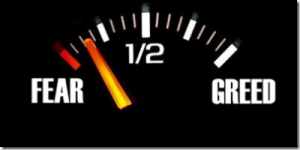
Fear and Greed

When I was a consultant in the UK rail industry, one of the people I used to work with, a very pragmatic ex IBM man, used to say (a lot) that there were only two reasons why anyone did anything or why anyone bought into anything.

Fear, or Greed

His terminology may be a little harsh, (but he’s like that, very much ‘no nonsense’ and to the point) and he’s probably right.

You and I most often do things for one of two reasons – and we sometimes do things for no reason at all!

Those two reasons are either we want to ‘move towards’ something or to ‘move away’ from something.

Or in other words we act (most of the time) on ‘towards’ or ‘away’ motivation.

Even if you and I want to ‘stay in the same place’ or preserve the status quo, it’s usually motivated by ‘fear of the unknown’ – what might happen if we change our position.

Or we’re motivated by some desire to preserve or protect what we have now – a form of ‘towards’ motivation. (My friend would have put this in the ‘greed’ category – hanging on to what we have.)

Fear’ and greed are very basic instincts.

Fear is straightforward and includes the fear of many things on the ‘dark side’ such as fear of death, injury, loss, change, ‘the unknown’ and all the emotions you and I would rather not dwell upon.

‘Greed’ also means desire, need, wanting something we don’t have and so on but can include the ‘good’ stuff – despite my friend’s cynicism! It’s what you and I want to move towards – which could be things we want to achieve or do for others as well as for ourselves.

It’s what you and I want to be, do or have, whereas ‘fear’ is what we don’t want to be do and have.

But there’s a problem.

‘Fear’ overrides ‘greed’ – well, usually.

Whatever you and I may gain from making a particular decision based on ‘towards motivation’, ‘fear’ – if we let it – will usually cancel it out.

It’s why most people make decisions based first of all on ‘away motivation’. They want to move away from a situation they find themselves in or (most often) they’re afraid what will happen if they move towards something different – or in other words ‘change’ something.

Advertisers and politicians play on this all the time.

They persuade people that they are ‘missing out’ on something and need to move away from their current situation before they can get a ‘better deal’ or avoid ‘losing’.

They create scare stories about what might happen if they make a certain decision to move them away from making that decision and towards the ‘safe’ decision that they want them to make.

‘If you vote for that it’ll be a disaster – vote for this’.

‘If you carry on buying from that supplier you’ll miss out – buy from us

It’s all a delicate balance between what they think people want and what they think people don’t want.

Which is why it doesn’t always ‘work’!

Because you and I and most other people aren’t stupid and sometimes the attempts at manipulation of peoples’ motivation are really obvious and we all see through it.

But you and I still have to be on our guard.

Many people just follow the ‘trend’ – where are most people going? Or where are the people they identify with going? In which direction, forward or away?

Then they just follow.

You and I know where we want to go, and where we don’t want to go; where and what ‘away from’ is and where and what ‘towards’ is – for us as individuals.

Because we know that you and I can make our own decisions without others attempting to ‘motivate’ us to do what they want.

WIN 023

WIN 023 150 150 Ben Coker Strategies


Design or Default?

Do you live your life by design or by default?

What do I mean by this?

Within any given culture ‘most’ people behave in the same way. They follow the same routines; they do the same things. They ‘default’ to whatever is considered ‘normal’ in the culture in which they exist.

Along with most people you and I were taught when we were very young, how to ‘behave’ in our society. What we should do, what we shouldn’t do.

Everyone is ‘conditioned’ at an early age to respond in certain ways to different stimuli.

And I’m not talking about ‘basic instincts’, the basic needs and the ‘fight or flight’ reactions that are ‘built in’ to us; but the responses we are taught to make to the societal or cultural stimuli you and I receive.

What most people do during their daily lives is the ‘default’:

Get up, go to work, watch TV, go to bed, get up, go to work, watch TV, go to bed, get up . . . and so on, with a few other daily rituals and other bits and pieces thrown in and a slight variation in pattern at the weekend.

You’re born, you go to school, you go to work, you pay taxes, you die. That’s it. Oh yes, and you create a family, a new generation, who then proceed to do exactly the same.

As Marvin the paranoid (and generally depressed) android says in The Hitch Hiker’s Guide to the Galaxy – “Life, don’t talk to me about life”.

Yes, ‘the default’ is really depressing, Marvin is absolutely right.

It’s not surprising many people look to the ‘celebrity culture’ to inject a bit of colour and variation, living their lives as it were, by proxy.

It’s interesting to note when people are talking about their favorite sports teams they say “We won” or “We lost” or “We played really well today” when in fact the only people actively involved were the players on the field.

But you and I are different.

You and I are the ones ‘on the edge’ – on the edge of the crowd, not comfortable following the ‘default’ way of living.

Sometimes you and I are the ‘misfits’ or even the ‘troublemakers’.

You and I question the default, the ‘norm’, we come up with different ways of doing things, we ‘reinvent the wheel’.

For this we sometimes suffer criticism, negativity or even hostility from the ‘crowd’ of ‘normal’ people who don’t want their default lifestyle disrupted.

But then sometimes you and I are the ones who ‘push the envelope’, who create something new, something which changes peoples’ lives for the better, makes things easier and sometimes even changes the ‘default’.

Good or bad, think about Steve Jobs and smartphones for a moment . . . did he change the default?

You and I are the ones who reject the idea of living by default. We prefer to decide for ourselves how we live our lives and to design our lives around our vision of what we want to achieve.

This may sound simple, to design our own lives, but it’s not easy.

You see, there’s still all the old default conditioning you and I took on board in our youth and perhaps for some time after as well.

It’s all in there, telling us “you can’t do that”, “it’ll never work”, “you’ll fail and look stupid”, and most powerful, “how are you going to do that?”

When you and I have a vision of what we want to be, do or have, we have to get around or ignore all this, especially the ‘how’ word.

Having a ‘design’ for our lives makes it easier to reject this internal (and sometimes external) opposition. We can just say “thanks for sharing that” or “I’ll take that under advisement” (whatever that means – but it sounds good) and get on with what we need to do to realise our life design.

If our design and our vision is clear (remember, resistance is created through lack of clarity) and we resist becoming a ‘defaulter’, then a way towards what we want to be do and have will present itself – never mind ‘how’.

WIN 022

WIN 022 150 150 Ben Coker Strategies


Onward and Upward

To go forward, to take the next step, to ‘move on up’ are ‘the ‘way to go’ for most people, especially you and me.

But we all often find this really, and I mean really, difficult.

There are always hesitations, always ‘what ifs?’ and always fears, or at best concerns, about what will happen when you or I do take that next step.

Because sometimes that step is significant.

Like the Israelites entering the promised land or Caesar crossing the Rubicon there is sometimes no way back.

In the case of the promised land, this was ‘the destination’ – they couldn’t go back and continue the journey or retrace their steps to Egypt – there would have been no point, the destination had been reached. But it was a whole new ball game once they arrived – very different from the journey they’d been taking for the past 40 years.

And for Caesar, crossing that somewhat small and insignificant river into the ‘enemy territory’ of Rome was something he couldn’t undo.

When the Vikings landed in a new territory after a sea voyage from their homeland, they burnt their boats rather than leaving them as an ‘escape route’ in case what they found in the new lands wasn’t quite to their liking. They couldn’t ‘go back’ so they had to go forward and make a new life in a new country and face whatever obstacles they encountered.

Sometimes you and I just have to ‘burn the bridges’ we’ve crossed so we can’t slip back into the comfort of a ‘safe’ environment we’ve chosen to leave in order to move forward towards achieving our goals and our vision of how we want our lives to be.

Now that’s all fairly easy to understand and it sounds simple, doesn’t it?

Yes. It is simple, but it’s not easy, because ‘things’ get in the way.

These ‘things’ can be physical things that you and I carry with us when we cross that bridge which we burn behind us. We bring them with us because either we don’t want to ‘let go’ of our past lives or because we believe we might need them in our new lives.

Deep down you and I know we’re never going to use them again because they aren’t relevant to where we are going but “you never know – they might just come in handy”.

But the biggest burden you and I carry with us is that huge filing cabinet of ‘stuff’ in our heads.

We carried it with us on the journey but didn’t leave it on the burning boat or throw it over with the burning embers of the bridge.

You and I may have crossed the line into our promised land, but we’re still ‘full’ of all those old beliefs, old memories, and old paradigms that may have been really useful in the past but have no real place in our new ‘lives’.

Hanging on to all this acts as a long bungee rope which at any time can snap us back into our old ways of thinking and our old limiting beliefs.

If you and I don’t do something about all this ‘stuff’ it will, it will definitely, take us back across the ocean, across the chasm, and across the line – back to square one.

All these limiting beliefs, bad memories and outdated paradigms are the snakes on the snakes & ladders board just waiting there to swallow us back down to where we really don’t want to be.

Even if it’s only one of the very small snakes taking that one step back means you and I have to take at least two steps forward just to get back on track towards our goals and vision.

Now of course you and I don’t have to ‘erase our hard drive’ and throw everything out. Instead, we have to go through what is often quite a long and difficult process of ‘deleting’ the bad memories and keeping the good ones, changing our belief patterns to make them relevant to where we are now (or where we want to be), and analysing our paradigms, algorithms and thought processes to make sure that ‘the way we think’ is in line with our current vision.

You and I need to ‘make space’ for new thinking, new beliefs, and new memories. We can’t put anything new and fresh in the glass if it’s already full – we have to empty some out first.

We have to let go and one of the best ways to do that is through gratitude.

Be grateful for the lessons we have learnt in the past, be grateful for the good or bad memories and experiences we’ve had, be grateful for the journey we’ve taken, and be grateful for all the people we’ve encountered along the way.

You and I would not be where we are now had it not been for all that ‘stuff’ in our past.

So let us all be grateful, let it go, and move on towards our vision.

WIN 021

WIN 021 150 150 Ben Coker Strategies


Silent Applause . . .

My friend Peter Thomson has a saying – “Money is the silent applause for a job well done”.

What does this mean?

I believe it’s an enlightened way of looking at money and how we use it.

Instead of believing we have to have money in order to ‘pay’ for the things we want and seeing ‘having to part with our hard earned cash’ as some sort of penalty for obtaining the basic needs of life or the additional ‘upgrades’ we desire, this way of looking at money is an expression of appreciation for the provision of those things from someone else.

So when you and I pay our phone bill it’s not a ‘cost’ or a ‘penalty’ but an appreciation for the service provided by the phone company. And of course, if we’re not happy the ‘job has been well done’ then you and I always have the option to change our phone provider.

This feeling money is essential to our lives, or our lives are dominated by the need to obtain money to get the things we want isn’t helped by the way most people obtain money.

Most people ‘work for a living’. Most people give up their time (something which can never be recovered) in exchange for a wage or salary – money.

The odd thing is most people aren’t paid so much for what they do, but for the time they spend doing it.

Some people are paid for the quality of their work or for the volume of product they produce, but this is not the norm and by some people it is even considered, to say the least, ‘unfair’.

The focus at most levels of society is on the ‘hours’ people spend ‘at work’ rather than doing the things they were actually employed to do. You and I live in a ‘time for money’ culture even though, if you are reading this, you probably don’t subscribe to that philosophy.

Because the majority of people have to sacrifice their time so they can obtain the money required to purchase the things they need or desire, their emotions become attached to money itself rather than the bargain they’ve made to give up some of their life time doing things they possibly don’t really want to do in order to spend the rest of their life time doing stuff they really do want to do.

There is also a great need for some people to accumulate money ‘just in case’. Money then becomes and end in itself.

But the thing is, money itself has no use whatever, you and I cannot eat money, we can’t use it to keep ourselves warm and we can’t use it to travel in. This is even more true these days when money in tangible form is rapidly ceasing to exist.

Most ‘money’ is virtual. It’s a ‘balance’ in an ‘account’ of some sort. You and I rarely carry around more than a very small amount of tangible money.

People give money an emotional value. They talk about being ‘rich’ or ‘poor’ in relation to their access to money but in reality, this emotional attachment is about them, not money, because money is entirely neutral.

Even when people ‘owe money’ or are ‘owed’ it, it’s not about the money, but more perhaps about whether the ‘job’ was ‘well done’ or not, or even about our opinion as to whether the ‘silent applause’ was loud enough!

Money only ever does one thing, and this is the fundamental reason why you and I use it. It circulates.

Money moves from one person to another (usually virtually) ideally (but not usually!) as ‘silent applause for a job well done’.

The circulation however is never ‘smooth’. You and I don’t all have the same access to the same amounts of money at the same time. It’s extremely rare for the same amount of money to go out of our ‘accounts’ every day, week or month as the amount coming in.

There are peaks and troughs and at any given time very few people have exactly the same amounts flowing into and out of their accounts.

Some claim this is ‘unfair’ and all money should be distributed ‘equally’, but the result of that would be, think about it, everything grinding to a halt.

Like blood, money has to circulate around the world’s economies and between individuals.

If it didn’t, everything would stagnate, fall over and expire. Circulation of money, like blood, is key to our survival, as individuals and as humanity.

I’m afraid that Gene Roddenberry’s theory in Star Trek of a society without money just doesn’t stand up. Pity.

Again, like blood, the more easily money flows around the fitter and more active we become. We can do without any blockages in the circulatory system or any slowing down of the flow.

I’m off to boost my circulation, how about you?