WIN

WIN 020

WIN 020 150 150 Ben Coker Strategies


Forgive and Forget?

So goes the saying, but what does it really mean. What do we mean by forgiveness and do we really forget someone we’ve forgiven?

To forgive someone is often difficult. We feel here is something they should do to earn our forgiveness but the thing is – they most often don’t understand they actually need to be forgiven.

In their mind they may not have done anything worthy of or requiring forgiveness.

Sometimes they do, but more often they don’t.

More often than not when we forgive someone, we are doing it for our own benefit.

You see, holding a resentment against someone for something they have done, not done, or just some way in which we perceive they have erred against us is actually our problem, yours and mine, and not theirs.

Holding a grudge or resentment against someone for whatever reason screws us up, not them.

Buddha said it is like picking up a hot coal and expecting the other person to be burnt.

When we hold a grudge you and I are locking up space in our internal filing systems which would be much better used for something else such as our own growth.

Then there’s the mirror image.

There are occasions when you and I ask for forgiveness from someone else for some error we have made in our relationship with them.

And quite often the thing for which we are begging forgiveness may not be such a big deal for the other party. They may say “Sure, you’re forgiven” – but to you and I it doesn’t really have much meaning.

This time the problem is still within ourselves, the resentment is actually against ourselves. It isn’t the other person who should forgive. It’s you and I who need to forgive ourselves.

But what about the ‘forget’ bit? The saying implies once the forgiveness is achieved all is forgotten but is that really the case?

The other person is still there, the memory is still there, and it always has the potential to rise up again and restart the process of resentment.

To really complete the forgiving process, it isn’t necessary to completely forget the person or the incident which caused the problem. In our minds, yours and mine, things have to change.

You and I have to complete the forgiveness process by changing our perception of the issue. We have to re-file it from the ‘grudges and resentments’ folder to somewhere that takes up less space – maybe ‘lessons learned’ or somewhere similar.

There are many techniques we can use to do this and lots of people teach them but one of the greatest teachers is the Dalai Lama.

His philosophy is based on love for all, but you may think he has a great deal to forgive for what has been done to his country, and sometimes it is very difficult to forgive.

It requires you and I to change our mindsets about the people we want to forgive to free ourselves from the hold they have over us.

The Dalai Lama refers to those people he finds it difficult to forgive, such as the Chinese Government, as his ‘sacred friends’ and this term is used to focus his, and your and my, attention on those people for whom we find forgiveness very difficult indeed.

Who are your ‘sacred friends’?  If you don’t have any you are truly blessed.

To help here is a short prayer or mantra from the Dalai Lama you can use, and you can substitute ‘I’, someone’s name, or ‘they’ for the ‘you’ in this verse as you direct it to whoever you wish to forgive.

“May you be truly happy

May you live in peace

May you live in love

May you know the power of forgiveness

May you know that your life has deep meaning and good purpose”

WIN 019

WIN 019 150 150 Ben Coker Strategies


Happy and Successful?

This may perhaps be a generalization, because I know some people whose aim in life seems to be to be miserable all the time, but ‘everyone’ desires to be ‘happy’ and ‘most people’ desire to be successful.

And there are some people who don’t seem to want to ‘succeed’ in life but prefer to ‘keep calm and carry on’, ‘keep their heads down’ and ‘hope for the best’.

In his book ‘Questions Are the Answers’ Allan Pease proposes a set of alternatives from which people can be asked to identify their ‘top priority’. I won’t list them here but perhaps strangely ‘happiness’ isn’t one of the options.

Instead, they are usually presented by people asking “What’s your top priority?” in the context of success; “So you’ll consider yourself successful if you achieve ‘financial freedom’?” would be a typical confirmation question after a choice is made.

Different people have different ideas about what it means to be ‘successful’. Most people however look at success in financial terms – a level of disposable income they will generate each year.

Other people consider they have succeeded if they ‘win’ something: a world championship in sport perhaps, an election, a special award, or a prize in some competition or other.

Success can also be seen as achieving a certain status. Often this is career based, but depending on society and culture it may be receipt of an ‘honour’ (such as a knighthood) or a particular position in society, maybe being recognized as an ‘elder’ or ‘wise man’ to whom people go for advice. In Western ‘celebrity culture’ it might be being considered to be on the ‘A list’ or as some other classification of ‘VIP’.

But what is the effect of achieving these successes?

What do they have to do with being happy?

There’s a clue in what I’ve just written.

Success has to be achieved, it’s the result of taking action, following a plan, reaching targets and goals and ultimately achieving the ambition and vision that you or I decided upon as our ‘success’. And of course, there are little ‘successes’ along the way as you and I achieve parts of that plan.

Success is a continuing process – a process of achievement that relies on activity – which is a ’soft’ word for ‘work’.

You and I have to do ‘work’ if we want to achieve our personal visions of success. Even the ‘A List’ celebrities have to do work, as do those in sport and those who are honoured by the state – success doesn’t come for nothing.

But happiness isn’t the same. Happiness is a state of ‘being’. You and I are happy at any particular time, or we are not, but there’s no reason why you and I can’t be happy all the time – wherever we are on our path to ‘success’.

Sadly, most people when you ask “How are you?” don’t reply “happy” – they are usually “fine”, “OK” or (at the bottom of the scale before they start telling you all their ‘troubles’) “not too bad”.

Many people think happiness also has to be achieved. They believe that achieving their ‘success’ will make them happy, but the truth is that it doesn’t work like that.

You see, the trouble is, and you and I both know this, once we’ve achieved one ‘success’ there’s always another vison or target to go for. Successful people don’t stop looking for more success – something faster, higher, stronger or just ‘better’ than before.

Now here’s the thing.

Success will never make anyone truly ‘happy’ and sometimes the effort required to achieve that success has the opposite effect. Striving for the next goal, the next target or even just the next necessary activity on the path can often obscure the underlying happiness of being which is really always there.

That’s not to say that you and I shouldn’t desire to be successful in whatever way we choose but we mustn’t be seduced into the idea that achieving success will bring happiness.

Happiness doesn’t ‘come’ it’s already within us. All you and I have to do is BE happy, wherever we are on our road to success.

I’ve not achieved by any means all the successes I would love to achieve. But right now as I take this small step on the way I am really happy.

How about you?

WIN 018

WIN 018 150 150 Ben Coker Strategies


It’s All an Illusion

I’m writing this on my birthday, 29th March. It’s one of those ages that you can turn upside down and the numbers are the same. Some of these occur when we’re quite young, other when we’re quite old. I’m somewhere in the middle.

Perhaps because of this I’m prompted to look at things in different ways.

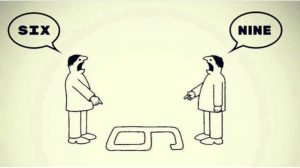
There’s an experiment where two people on opposite sides of a table are looking at a ball suspended between them. They are asked to discuss what they see and decide on the colour of the ball. A fierce argument ensues as one states categorically the ball is red and the other insists it is blue. The truth is half of the ball is red and the other half blue but neither person can see the whole ball.

On a lighter note there’s the joke in the Father Ted comedy sitcom when Ted is attempting to explain to Dougal that “these (model) cows are small, those cows (in the field) are far away”.

When you or I have a decision to make; there are positive and negative arguments, pros and cons, for and against. We look at something from different angles and according to our perceptions, yours and mine, we may or may not come up with different ‘answers’.

Often, like a coin, both sides of the argument actually have the same value. But when you and I toss a coin to make a decision there is always a ‘right’ and a ‘wrong’ according to which way the coin falls – at least as far as you and I are concerned!

Joni Mitchell sang:

“I’ve looked at life from both sides now,

From win and lose but still somehow

It’s life’s illusions I recall

I really don’t know life at all.”

She’s quite correct. What you and I see when we ‘look’ at something really is an illusion.

Whether it’s an object or a scene or if it’s a situation or a question, what you and I ‘see’ or ‘understand’ results from our perceptions of what we ‘see’ which in turn result from the conditioning we have taken on board throughout our lives so far.

Crime scene witnesses rarely come up with the same description of what they ‘saw’, and indeed it’s considered suspicious by investigators if people come up with identical stories.

People have a myriad of different opinions on different subjects. Some people will ‘see’ it one way, other people will take a different ‘view’.

If you’re on the inside of a bottle you can’t see what’s written on the outside of the label and if you live inside a paradigm you’ve developed over the years, it’s difficult to see things other people can see. But of course, everyone has the same problem.

There is no ‘wrong’, there is no ‘right’. It’s not a binary choice. At any one time, different people will have different opinions on what it is they see. And you and I know during our own lives our own opinions on what we see have also changed.

Things not acceptable 50 years ago are now acceptable and even sometimes encouraged, and vice versa.

50 years ago, most people smoked, and it was a normal social practice to offer people a cigarette when you met them and even impolite if you didn’t; now, smoking is illegal in many places and actively discouraged.

You and I and everyone else have our own perspective on life. Much of this perspective consists of self-limiting beliefs about how we are supposed to ‘behave’ and what we are supposed to believe – a result of conditioning over the years by people we know, the media and the culture of the society we live in.

This perspective works like a lens and affects how we ‘see’ things and what decisions we make.

But we can change the lens and look at things from different ‘angles’ using a different set of ‘rules’ or even better, no rules.

Look at ‘it’ (whatever ‘it’ is) from both sides, from inside out or outside in, through a microscope, from top to bottom, back to front, upside down or even ‘through the looking glass’.

Then you’ll stand a chance of understanding what you’re looking at and making a decision about what it is or what to do without being encumbered by what has gone before.

I’m off to start a new year, but I’m clearing out some of the perceptions, conditioning and paradigms I’ve collected on my ‘hard drive’ first.

How about you?

WIN 017

WIN 017 150 150 Ben Coker Strategies


What’s the worst that can happen?

You know when you’re having a conversation with someone close to you about your goals or you’re trying to explain what you want to do to your ‘nearest and dearest’ –  and they say:

“You can’t do that” – or

“How’s that going to work then?” – or

“What do you know about? . . . (whatever it is you’re proposing)

As if you and I didn’t have enough trouble with our own limiting beliefs and not being certain what we’re planning to do would actually work.

To have your closest family and friends put down your ideas or tell you your goals and ambitions are unachievable isn’t helpful.

But the thing is they’re not trying to put you down (which is what it feels like), they’re really trying to help you, to protect you, to save you from what they (without your vision) see as a dangerous or potentially fatal course.

(Fatal to your lifestyle that is . . . usually)

The worst that can happen is that you believe them and stop, quit, or give up on your goals, ambitions and passions.

But of course, you and I don’t do this with others when they tell us what they want to achieve or what their plans are for the future.

Or do we?

It’s very, very easy to fall into the trap. Very easy to find reasons why our nearest and dearest or anyone else shouldn’t follow the course they’re proposing.

It’s very tempting to try and get them to tone down their ambitions so they’ll be ‘saved’ from disappointment.

The trouble is it’s instinctive behaviour. It’s cavewoman telling caveman to be careful when he goes out hunting, not to take any risks, better to come back without any food for today than not come back at all. It’s about protecting the tribe.

And although life’s not like that anymore that old protective instinct is still there.

(Just think what would have not happened if the guy who invented the wheel had believed it when he was told it would never work and decided not to pursue his idea.)

This is why you and I should always associate with positive people and, if we have them, keep our concerns to ourselves.

You and I never tell anyone “it can’t be done” or “you can’t do that” – even if we do have no idea what they are talking about, can’t see how they’ll achieve it, or don’t think they have the appropriate skill sets.

The only time you and I ‘step in’ is when others actually ask for help or we see that they are in immediate physical or psychological danger.

You and I say – “I’ve no idea how you’re going to do it but I’m here to help if you need me – do keep me in touch with how you get on, it sounds really interesting”.

You and I turn our thinking away from any concept of our friends not achieving their goals and support their belief in themselves and if we find this difficult, we just think ‘oh well if there are any problems we’ll face them when they crop up and help our friend deal with them at the time’.

The worst thing you and I can do for anyone who tells us about their goals and ambitions is give them any reason not to go ahead, give any support to their own limiting beliefs, or question their abilities to achieve what they want.

And you and I must always endeavour to take the same approach with ourselves.

Ignore our negative thinking, ignore our own questions about our abilities and dismiss all the other doubts and fears we may have – and as Sir Richard Branson says – ‘screw it – just do it’.

There’s a line spoken by the ‘quack doctor’ in the Antrobus Soul Cakers annual Hallowe’en mummers play – “If you don’t believe me, try me”.

It’s the ideal response to anyone who attempts, for whatever reason, to stop you from going ahead with your ambitions (even if you don’t say it to their face!)

WIN 016

WIN 016 150 150 Ben Coker Strategies


What You See is What You Get . . . Or Is It?

One of my MBA tutors used to say that if the answer isn’t clearly yes or no then the best response is always “it depends”

It depends on how you and I ‘see’ things.

But it’s not just about sight.

When you and I see something a whole lot of other things kick in, Like memories – and feelings.

When we see something we reference something similar – or different, something we’ve seen before, and this summons up a feeling about what we’re looking at.

When you and I see something we might feel scared, or happy, or disgusted, or relaxed – it depends.

It’s rarely neutral – even if it’s something never seen before when we might get a feeling of curiosity or confusion.

Putting all this together the result of seeing something is the creation of a perception about the object, person or situation being observed.

It’s our personal perception.

Yours and mine will be different, even if only slightly, from the perceptions of everyone else.

When you or I see something – physical or virtual like a photo or a movie we both have our own individual perception.

In a sense we each ‘get’ what we see – we ‘get’ it – we understand it.

But our individual understandings aren’t necessarily the same.

So what we see is what we ‘get’ – or individually understand from what we see.

You and I will quickly understand that we need to get out of the way if we see a car approaching us at speed.

Now I think that I’m a fairly straightforward person – I say what I think and I use words that I mean.

But what do you ‘get’ when you see or hear me?

I’m sure its highly likely to be different from my perception of me.

Some say – – –  it takes about 7 seconds for you and I to generate a perception of someone when we meet them for the first time – other estimates go up to around 30 seconds.

Trouble is, if we get it wrong (from either side) in those first few seconds it can take a lot of effort to change that perception even if we want to.

It can be done but it’s not easy or quick.

And, it’s not just about people.

You and I all have a set of perceptions or beliefs that we’ve built up over the years about everything that goes on in the world. From politics and religion to what shape and colour our vegetables should be and how fast our broadband should go.

You and I all have perceptions about ourselves. About who we are, and what we want to be, do and have.

We see where we are now usually quite clearly, so that’s what we ‘get’ or understand right now.

But often we aren’t at all clear about where we’re going – where we want to be in the future – and what it will be like when we get there.

We can’t see it.

You and I often hear people say “I just don’t see it happening” or “I can’t see how”

But we’ve already learnt that what we see now is what we get now and is what and where we are now.

So what if we could turn this on its head?

What if you and I could ‘see’ us in the future?

Create a picture of who, what and where we each want to be

What we each want to do and have?

Well, we can.

I’ve personally done this with some measure of success at least four times, maybe more. But I’ve discovered that there are a few rules we need to follow to see and to get what we want in the future.

We need to create a ‘vision’ of what our future will be.

A ‘big picture’.

But then think of that as a jigsaw – a small child’s jigsaw that has a few big pieces to put together.

To make the big picture come about, start with one piece and work on one at a time to put it all in place.

Trying to do it all in one go just won’t work.

The reason why is it’s very difficult to get a clear and detailed view of the whole thing in one go. Your perception of the big picture will be vague and you may miss important details.

Try this looking at any picture – you just can’t see all the detail in one go.

You can’t make this work without a clear perception of what it really is that you want – in detail – as I know to my cost.

So break down your overall vision into small chunks that you can work on one at a time.

Create a detailed perception (or visualisation) of each thing you want to ‘get’. Each thing you want to be, do or have.

And then if you focus on it.

What you ‘see’ will be what you get.

And with care, all the pieces will come together.

I’m off to figure out my jigsaw.

WIN 015

WIN 015 150 150 Ben Coker Strategies


‘Groundhog Day’

Groundhog Day

“You can’t start the next chapter in your life if you keep re-reading the last one.”

No-one seems to know where that quotation came from. A shame as it’s very profound.

You and I and everyone else spend a lot of time thinking about the past – or re-reading the current or previous chapters.

But you and I also want to move on.

Either to start the next chapter straight away or to ‘finish’ the current one.

A friend of mine who is the same age (and we’re both drawing a state pension) recently wrote his “25-year plan” for the future.

Probably the next book rather than just a chapter!

And, he’s changed things and made a start.

But many people I know, and many who are several years younger, seem to be stuck in the same chapter of the same book of their lives.

Like ‘Groundhog Day’ it restarts every time they reach the ‘end’ and although each ‘reading’ of the chapter isn’t identical it’s still the ‘same’.

You know how it is when you watch a movie or read a book several times – there’s always something there that you ‘missed’ before or previously interpreted in a different way. But in the end it’s still the same book or film.

Life can be like that. People go over the same ground over and over again, follow the same paths, encounter the same obstacles and have the same successes.

Of course it happens slightly differently each time. But until you and I start the next chapter or open a new book, the end result, on the whole, of every day, week, month and year, is going to be much the same.

Yes, people can make ‘changes’ like moving house or going to live in another town or country. But if they take their current ‘book’ with them and continue reading the ‘chapter’ they’re on then it isn’t going to make much difference.

I know, I’ve done it. I’ve thought I was starting ‘a new life’ or a new book/chapter but it didn’t really happen because I was ‘stuck’ in the current one.

On the other hand, I have started ‘new books’ with some success from time to time and indeed found myself ‘reading’ more than one book at the same time – although I was probably stuck on one chapter in each book.

Some of those books I’ve finished, and some are no longer in my ‘library’.

Now I’m not saying that you and I should discard all of what has gone before.

There’s no harm in looking back on our successes and our mistakes as we learn from both and we don’t want to throw away that knowledge.

Provided of course you and I remember that we’re no longer ‘in’ those chapters of those books any more, but in a different chapter of a different book, and simply apply our knowledge and experience from the previous ‘books’ to whatever we are doing now.

So how do you and I make the move to the next chapter or the next book?

And do we want to?

There are people who are happy and content with how things are now, who don’t want to change. That’s great, but are they on the last chapter of the last book?

There are people (not you and I) who just accept things as they are even though they aren’t happy and content. Maybe they’re just not reading?

But if, like me, you’re ready for a new chapter or a new book what’s the next step?

You know when, you’re reading a book and you flip through the pages or look at the contents list to see how many more chapters there are?

And you know when you’re watching a TV series you check to see how many more episodes there are until you get to the end of the ‘story’?

Well just check your ‘book’ and see what’s left.

Maybe like my friend and his 25-year plan, you need to get a new book.

Take a look at your ‘dreams’, ambitions, and goals and see if the chapter your on now and the rest of the book you’re in now is going to take you there.

Maybe it’s time to put down the current book.

Maybe it’s time for me to put down mine.

P.S. There are six simple questions you can ask yourself to check out whether you’re on the right track with your current ‘reading’. But that’s another story.

WIN 014

WIN 014 150 150 Ben Coker Strategies


Too Much Information

You and I are all constantly bombarded with more and more ‘information’.

Some of this may be useful information we want, but the rest of it is often irrelevant to us or simply rubbish or even harmful.

It’s all a bit like the rays bombarding us through the atmosphere – light, cosmic, ultra-violet and so on – some of which we have to protect ourselves against.

You and I do of course from time to time seek out specific information – to help us in achieving our goals but many people also seem to have a craving for as much as they can get – whatever it is.

They scour the world wide web and so-called ‘social media’, devouring everything they can find, useful or not, seemingly without any sense of purpose.

The other side to this of course is that there are millions of people – yes, myself included – pouring out information in all directions in the hope that others will pick up on what they are saying.

Two questions spring to mind.

Has this anything to do with ‘communication’?

Has this anything to do with ‘knowledge’?

What are people all attempting to do sending out all these blogs, posts, tweets, mailings, videos, photos, comments, and so on?

Is it just about wanting to be ‘noticed’ or simply to brag about what they’ve done or where they’ve been?

Is it just about ‘pitching’ something they want to sell to other people?

Is it about not wanting to feel isolated but be part of some sort of ‘virtual community’?

I don’t think this is quite what Sir Tim Berners-Lee had in mind when he came up with the idea of the World Wide Web.

I think it was more about sharing knowledge and ideas, more about giving people the facility to help others through civilized communication, and more about improving the accessibility of information.

The ‘web’ is an amazing tool that has huge potential to allow people to really communicate with each other.

Tower of Babel

But like the Tower of Babel, which according to legend was constructed to help people communicate with God, ii’s heading in the direction of simply creating more and more confusion.

Texts from many different religions describe how the ‘tower’ was destroyed and how people started to speak in different languages losing their ability not only to communicate with their God but also with each other.

You and I see this happening now, particularly on social media, where although people are perhaps speaking the same ‘language’ they are clearly at cross purposes, taking offence at what someone else has said and being openly hostile to one another, with some even using it for deliberately disruptive or destructive purposes.

The danger is, if we don’t use this resource more carefully, the web (or some parts of it) could just ‘self-destruct’ as people decide that the pain involved is greater than the gain.

There should be no place for anything that would not be said face to face, and no place for gossip ‘behind peoples’ backs’.

Remember (like Vegas) ‘what happens on the web stays on the web’ – but the difference is everyone can see it.

Is this really what everyone wants?

You and I know that the only real way to communicate and get to know each other is on a face to face basis, which includes talking on the phone or using a video link so we can see each other ‘live’.

We can’t really know, or be ‘friends’ with, someone we’ve never met or spoken to. Humanity just doesn’t work like that.

The more people rely on technology such as e-mail, texting and the web to attempt to communicate, the more miscommunication and misunderstanding will grow so let’s not fall into this trap.

It’s fine to use these methods to communicate with people you and I already know (on a face to face basis) but pretending we ‘know’ people we’re ‘connected to’ or are ‘friends’ with on social media just doesn’t cut it.

If you and I want to expand our networks of people we know, then just think about how this worked ‘BC’ (that’s ‘before computers’).

It happened in two ways – by ‘bumping into someone’ or by being ‘introduced’ by a mutual friend or colleague.

The web is ideal for these ways of getting to know other people – we can ‘bump into someone’ on the web and we can be introduced or referred to other people.

But you and I will remember it doesn’t stop there – these new contacts must be ‘validated’ by at least one one-to-one conversation before they can really be counted as a contact or friend.

So let’s make some more real connections with new people. Only then can we talk about what we may be able to offer each other in terms of help or knowledge.

WIN 013

WIN 013 150 150 Ben Coker Strategies


It’s Not Normal!

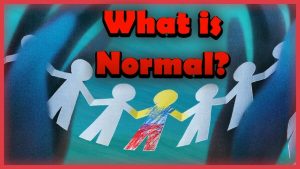
I’m hearing a lot just recently about people wanting to be ‘normal’ or wanting the ‘right’ to a ‘normal life’ or wanting others to ‘behave like normal people’.

But what is ‘normal’?

Without getting involved in statistical, linguistic or even political discussions ‘normal’ means ‘not deviating from the norm’.

In statistics a normal distribution is the curve created by plotting data values where the (single) most common value – or norm, (or mean) appears as a peak in the middle.

On either side of this value figures ‘deviate’ from the norm as they become lower or higher. Often the numbers are symmetrical, but it’s not always like that.

So are ‘normal’ people all the same height, or weight, or shape, or colour? Of course not, statistics doesn’t help here.

In behavioural terms ‘the norm’ is defined as “an accepted standard of behavior” within a society and ‘normal’ people are those who do not deviate from the norm.

The problem is that the accepted standard changes significantly over the years within a society and is markedly different from one culture to another.

Behaviours that are perfectly acceptable in Eastern cultures are often not in the West, and vice versa – so does that mean the people from other cultures are ‘not normal’?

History has shown this is a common belief and some regimes have taken extreme measures to ‘normalise’ their populations (and those of their neighbours).

So why do so many people want to be ‘normal’ and want everyone else to be ‘normal’?

Very few people (if any) however, want to be ‘average’ – which is very close to normal.

An average is calculated by taking a set of data, adding all the values together and dividing by the number of data points within the set.

Which is how the ‘average’ family at one time turned out to be two parents, 2.4 children, a cat and half a dog.

And then there’s the spurious ‘law of averages’ beloved of sales trainers – the theory being that if you repeat something enough times you’ll always get the same number of positive and negative results.

It goes like this – If 20 people say ‘no’ you’re bound to get a ‘yes’ very soon, so keep making the calls.

But what if you’re doing it wrong?

And often the same people totally contradict themselves by telling us that if you keep doing the same things you’ll always get the same results.

I’ve actually heard both of those statements made in the same speech!

There’s actually no such thing as ‘average’ – it’s never more than just a number, usually a totally meaningless number.

So it makes sense that no-one wants to be average – but that’s not what they mean.

They mean that they want to be ‘better than’ or ‘different from’ average.

But at the same time they want to be ‘normal’

Oh by the way, I’m talking about ‘most people’. You and I are not ‘normal’. If we were I wouldn’t be writing this and you wouldn’t be reading it.

(And if you’ve met me then you’ll know I’m definitely not ‘normal’!)

There’s a lot of pressure put on everyone to be ‘normal’ and it comes from those who aren’t.

‘Normal’ people don’t become politicians or journalists or propagandists.

In the majority of states and cultures it’s believed that the existence and stability of a ‘civilised society’ depends on the majority of people being ‘normal’ – not deviating from the cultural behavioural norms.

Some states, past and present, have had significant success in enforcing this – much to the consternation of their neighbours who don’t see ‘normal’ the same way.

Sometimes this concept of ‘normal’ is interpreted as ‘equal’. The logic is that if everyone is ‘equal’ then all will be normal.

But not many people want to be ‘equal’ with everyone else, most people want something better, or different.

There’s nothing wrong with all people being ‘created equal’ or everyone having ‘equal opportunity’ – we are and we do – although some children aren’t born equal and sometimes the equal opportunities have ‘terms and conditions’.

Most people want to be normal but not average or equal.

The answer lies in redefining ‘normal’.

Instead of a destination – people wanting to become normal and wanting other people to become normal like them – it could be where we start from.

You and I could decide to treat everyone as basically ‘normal’ – we do after all have a huge amount in common with only a few minor differences in physical detail.

You and I and everyone else have different skills and abilities – that’s normal

You and I and everyone else have different interests and beliefs – that’s normal

You and I and everyone else have different knowledge and understanding – that’s normal.

Let’s leave ‘normal’ behind and continue our journey to being different and better than we are now – and help others do the same.

Explain that ‘normal’ is not where they want to go or want others to go. Everyone is already normal – it’s just where we start from.

It’s where we’re going that matters – and that isn’t normal!

WIN 011

WIN 011 150 150 Ben Coker Strategies


Seeing is Believing . . .

But faith is blind.

People often get very confused about ‘faith’ and ‘belief’ very often thinking that they are the same thing.

They’re not.

Most people’s beliefs are based on ‘evidence’ – which may of course be true or false. Now by ‘false’ I don’t necessarily mean untrue or incorrect, I mean unclear or unproven or maybe just partial.

Faith however doesn’t need any ‘evidence’, it doesn’t need to be proven. When we have true faith in something, we really don’t care about any ‘evidence’ that is presented or indeed whether or not there is any evidence at all about what we have faith in.

Faith doesn’t require the services of Kipling’s six ‘men’ – who, what, why, how, where and when. If we have faith in something we just don’t need to know any of that.

Belief is different.

Our beliefs are built up over time from what we’ve seen, heard, read, been told, researched, experienced for ourselves and so on.

Which is why most people have different beliefs.

Which is why two people can have totally different beliefs about the same thing.

Which is why, because those beliefs have been generated out of our own experiences and out of our ‘perceptions’ of what others have done, said or written, many of those beliefs are ‘wrong’.

Especially some of the beliefs we have about ourselves.

Essentially our beliefs are based on our level of understanding of a situation or concept. They may be about something real and physical, or virtual and philosophical.

Some beliefs are held by a lot of people, some by a few.

Many people have ‘opposing’ beliefs – different understanding about the same thing.

And most of us have opposing beliefs about ourselves. We have beliefs that limit our ability to progress, to change, to do all sorts of things. We often believe that we ‘can’t’ do some of the things that other people can do.

These ‘limiting beliefs’ derived from perfectly reasonable perceptions and understandings – at the time they were formed – are often no longer relevant. Bu they’re still there.

The answer is faith.

We must have faith in ourselves.

We must have faith that, come what may, we will achieve whatever we want to be, do and have in the future.

Without having to employ Kipling’s six serving men. Most of all, the one beginning with ‘H’.

Worrying about how we’re going to achieve something undermines our faith that we will do it and that ‘worrying’ is kicked off by those limiting beliefs we have about ourselves and our abilities.

We can of course have faith in our beliefs – we can be certain that some of them are ‘right’.

But which ones?

Having faith in a ‘belief’ means accepting it regardless of any evidence (or lack of evidence) either for or against. It can be dangerous – especially to us.

I’m off to examine what I believe about myself, get rid of those limiting beliefs, and build up my faith in me.

How about you?

Enjoy

WIN 012

WIN 012 150 150 Ben Coker Strategies


It’s All Relative

Since last week more evidence has come to light (if that’s the right word in this particular instance) to support Einstein’s Theory of Relativity – still a ‘theory’ by the way, not a ‘Law’ – just like Darwin’s Theory of Evolution.

Not to say that either of these are ‘wrong’ – it’s just that neither have passed all the tests demanded by academic rigour.

There are still ‘missing links’ in the chain of logic.

But that’s not what this is about.

We judge things in relation to one another.

We make decisions based on the relationship of one idea to another.

A jury will look at the evidence presented by each side of the case and base their verdict on their perception of the credibility of each.

In other words, they’ll compare the ‘for’ and the ‘against’, the ‘pro’s’ and the ‘con’s’, the ‘guilty’ and the ‘not guilty’.

Without contrast, if only one side of the case were presented, no decision would be possible.

A verdict might be reached but if all the evidence was in favour of the defendant and none was presented by the prosecution, the case would fall and the defendant found ‘not guilty’.

But it wouldn’t have been a decision.

When we buy things – we all love to buy stuff – admit it!

When we buy things we like to compare alternatives and make a decision about what we end up buying.

This is in academic terms the third stage of the buying process – the evaluation of alternatives – and its generally true.

There are exceptions of course – every time Apple brings out a new product there are lots of people who will automatically buy it – whether they need it or not, whether they really want it or not.

They don’t really make a ‘decision’.

They by-pass the buying process – that’s the power of Apple’s marketing and the legacy of Steve Jobs.

But back to reality, where apples are just a fruit.

Most people, when we want to purchase something, first carry out a search for the product or service we’ve decided we want and we select two or three alternatives – just a few final candidates to choose from.

We may have course eliminated quite a few others on the way.

We consider our options.

Recently I bought a car, a second hand car as it happens, and I had an evaluation to make before I picked the one I decided to buy.

There were a number of parameters – cost, mileage, style, performance, and so on.

These may have an order of importance but it’s probably unwise to base decisions on a single parameter such as cost. You may not end up with the best ‘deal’

There was one car at the high end of my budget but in the style I was looking for, another at the low end but with a high mileage on the clock, and a third in the mid-range for cost but with a low mileage for its age.

Number 1 seemed a bit expensive compared with the others, number 2, although ‘cheaper’ was not such good value for money. I eventually chose number 3.

This car in my opinion was the best value.

But without being able to compare – or contrast – one against the other, I would not have been able to come to that decision.

When we decide we want to buy a specific product or service most people just look at the cost, particularly if it’s a ‘commodity’ or something that’s the ‘same’ whoever you buy it from.

Different suppliers usually headline with the cost: “Our’s is the cheapest” you hear them cry in their 30 second TV ads.

But without contrasting their offer with others, how do you know that – in the long term and considering the ‘terms and conditions’ – that it really is ‘the cheapest’. The headline price might be cheaper but the overall cost might be higher.

Without anything to contrast all the aspects of their offer against you won’t know whether it’s ‘cheap’ or ‘expensive’.

When buying it’s essential to look at all aspects of what’s on offer from different providers.

And the same applies to different offers from the same provider.

Because without that contrast you won’t be able to make a proper decision.

Or any decision at all!

Happy buying